
In a typical Malaysian palm oil mill, electric motors account for up to 80% of total electrical energy consumption. By replacing aging, rewound standard efficiency motors (IE1 or below) with Premium (IE3) or Super Premium (IE4) efficiency motors, mills can reduce motor energy losses by up to 30%.

When applied mill-wide—from screw presses to decanters—this translates to massive reductions in operational expenses (OPEX) and ensures compliance with the newly enforced Energy Efficiency and Conservation Act (EECA).
What Are IE3 and IE4 Motors?
To understand the savings, we must define the global efficiency standards set by the International Electrotechnical Commission (IEC). The IEC 60034-30-1 standard categorizes electric motors into distinct efficiency classes.
- IE1 (Standard Efficiency): The old industry baseline. High energy loss and heat generation.
- IE2 (High Efficiency): A slight improvement, but no longer the standard for modern industrial facilities.
- IE3 (Premium Efficiency): The current minimum standard in many developed nations. Features better materials, reduced electrical resistance, and runs cooler.
- IE4 (Super Premium Efficiency): The most efficient motors available today, often utilizing permanent magnet technology. Ideal for continuous, heavy-duty operations.
Efficiency Comparison Table
Here is a quick look at how these motors compare when running a typical 75kW load common in mill applications:
| Motor Class | Average Efficiency (75kW) | Relative Energy Loss | Best Used For |
|---|---|---|---|
| IE1 | ~92.0% | Highest | Should be phased out immediately |
| IE2 | ~94.0% | Moderate | Light duty, non-continuous operations |
| IE3 | ~95.4% | Low | Standard mill operations, pumps, conveyors |
| IE4 | ~96.2%+ | Lowest | High-load, continuous operations (e.g., decanters) |
(Note: Data is illustrative; actual efficiency depends on the specific manufacturer and operating load).
Why Palm Oil Mills in Malaysia Must Upgrade Now
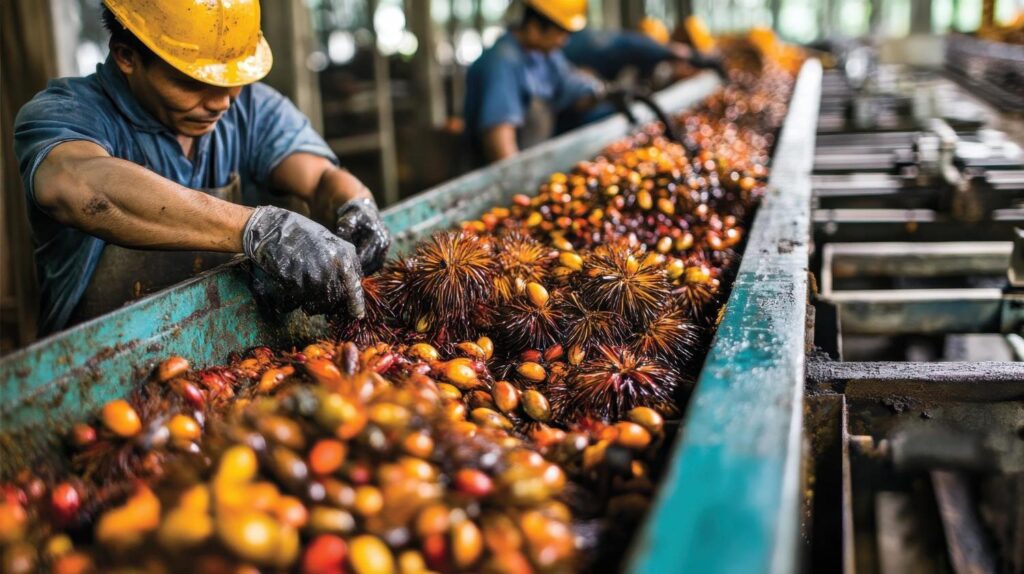
When an old motor fails in the harsh, high-humidity environment of a palm oil mill, maintenance teams often send it for rewinding to save upfront costs. However, every rewind drops the motor’s efficiency by 1% to 2%. A motor rewound three times is essentially an energy black hole.
Upgrading to IE3 and IE4 motors provides three distinct operational advantages for palm oil extraction. In most cases, IE3 is considered the minimum practical upgrade, as the jump from IE1 to IE4 often raises concerns around upfront investment costs.
- EECA Compliance: With Malaysia enforcing the Energy Efficiency and Conservation Act (EECA) 2024 through the Energy Commission (Suruhanjaya Tenaga), large energy consumers are now legally required to implement energy management systems and undergo regular audits. High-efficiency motors are the fastest way to hit these mandated reduction targets.
- MSPO and ESG Goals: Global buyers demand greener supply chains. Reducing your Scope 2 emissions through energy efficiency directly aligns with the rigorous sustainability requirements of the Malaysian Sustainable Palm Oil (MSPO) certification, strengthening your ESG profile.
- Lower Thermal Stress: Mills operate in hot climates. IE3 and IE4 motors generate significantly less waste heat, extending the life of the motor’s insulation and bearings during peak crop seasons when operations run 24/7.
How to Calculate the ROI of an IE3/IE4 Upgrade
The math behind upgrading is straightforward. To calculate your potential savings and payback period, you need four variables:
- Current motor efficiency: (Look at the nameplate, or estimate lower if rewound).
- New motor efficiency: (IE3 or IE4).
- Operating hours per year: (e.g., 6,000 hours during peak production).
- Cost of electricity: Check the latest Commercial & Industrial Tariffs from Tenaga Nasional Berhad (TNB) (e.g., Medium Voltage General Industrial Tariff E1).
The Reality Check: While an IE4 motor costs more upfront than an IE2 motor, the purchase price typically accounts for only 2-3% of the motor’s total lifecycle cost. The other 97% is electricity. By reducing that 97% footprint, payback periods in heavy-use mill scenarios usually fall between 12 to 24 months.
3 Steps to Transition Your Mill
If you are a mill manager or engineer looking to implement this, do not replace everything at once. Use this strategic approach:
- Conduct a Motor Inventory: Audit your plant. Identify the largest, longest-running motors first (e.g., boiler feed water pumps, main exhaust fans, and decanter centrifuges).
- Establish a “Replace, Don’t Rewind” Policy: Write a standard operating procedure (SOP) that dictates any failed IE1 or IE2 motor under 50kW must be replaced with an IE3 motor, rather than sent for rewinding.
- Pair with Variable Frequency Drives (VFDs): To maximize the 30% reduction, pair your new IE4 motors with VFDs on applications with variable loads (like fans and pumps) to match motor speed to exact process demands.
Ready to cut your operational costs and meet your energy targets? The team at Apex Uniparts has been helping Malaysian palm oil mills optimize their systems since 1983. Contact us today to discuss motor upgrades, WEG drive solutions, and energy-efficient integrated systems for your mill.