
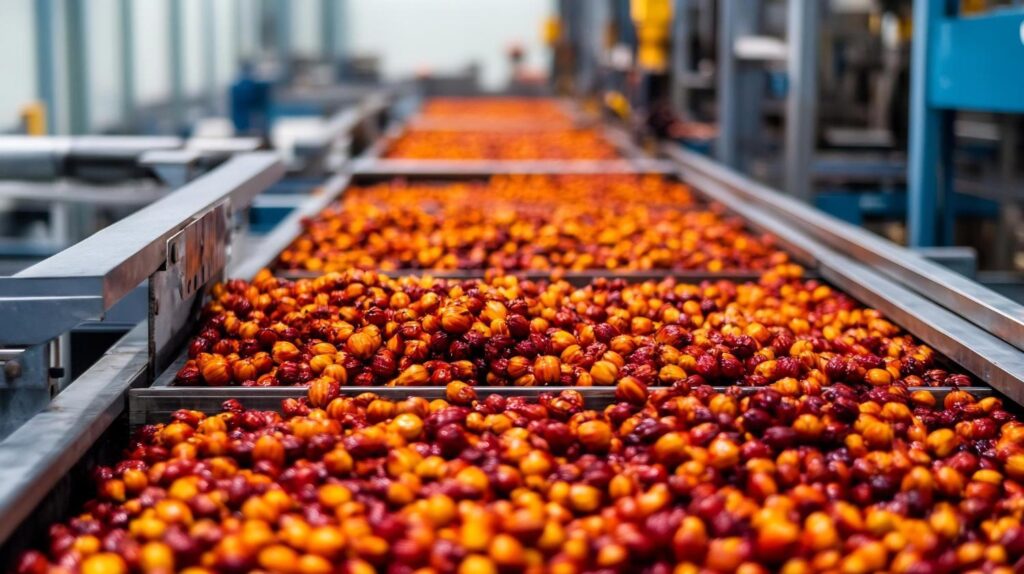
Malaysia’s palm oil industry relies on efficient milling equipment to convert fresh fruit bunches (FFB) into crude palm oil (CPO) while recovering valuable palm kernels and other by-products.
The palm oil milling process involves several interconnected stages, from sterilisation and threshing to digestion, pressing, clarification, and purification. The Malaysian Palm Oil Board (MPOB) identifies these as key stages in FFB processing. Learn more about palm oil processing from MPOB.
Because each stage affects the next, selecting reliable palm oil mill equipment is important for maintaining process efficiency, product quality, and operational reliability.
Palm Oil Milling Process at a Glance
A simplified palm oil milling process follows this sequence:
FFB Reception → Sterilisation → Threshing → Digestion → Pressing → Clarification → Purification
The mill also requires supporting equipment for material handling, kernel recovery, fluid transfer, steam generation, and process control.
MPOB’s published process flow similarly shows FFB moving through sterilisation, threshing, digestion, pressing, screening, clarification, purification, and drying before CPO storage.
1. FFB Reception and Handling
The process begins when fresh fruit bunches (FFB) arrive at the mill.
Typical equipment includes:
- Hoppers
- Cages
- Conveyors
- Weighing systems
- Transfer equipment
The objective is to move FFB efficiently from reception to sterilisation while minimising spillage and handling losses.
For modern mills, conveyor-based handling can also help reduce spillage and simplify mill operation. MPOB research on continuous sterilisation highlights the use of conveyors as an alternative to cages and cranes for FFB handling. Read MPOB’s research on modern palm oil milling.
2. Steriliser
The steriliser uses steam to treat FFB before further processing.
Sterilisation helps deactivate enzymes, loosen fruits from the bunch, soften the mesocarp, and condition the nuts for subsequent processing. MPOB states that FFB is typically sterilised at around 140°C for 75–90 minutes, depending on the process.
Because sterilisation involves high temperature and pressure, the equipment requires appropriate design, operation, inspection, and maintenance.
3. Thresher
After sterilisation, the bunches enter a thresher, where the individual fruits are separated from the empty fruit bunches (EFB).
The fruitlets continue to digest, while the EFB can be collected for other applications such as mulching, biomass utilisation, or further processing.
Efficient threshing helps ensure that fruit is properly separated before entering the next stage.
4. Digester
The digester prepares the palm fruit for oil extraction.
Inside the digester, heated fruit is mechanically stirred and mashed. This breaks down the oil-bearing cells in the mesocarp and produces a suitable mash for pressing.
The digester therefore relies on a dependable drive system to maintain the required mechanical action.
For palm oil mills, Apex Uniparts supplies the Apex Drive/Guomao Series ADGF Digester Drive for digester applications.
5. Screw Press
The screw press mechanically extracts crude palm oil from the digested fruit mash.
The pressing stage produces a mixture containing crude oil, water and solids, while the remaining press cake contains fibre and nuts.
MPOB highlights screw speed, pressure-cone settings, digester operation, mash condition, and maintenance as factors that can affect oil and kernel recovery. Read MPOB’s guidance on screw-press optimisation.
This makes the screw press and its drive system important components of mill operation.
Apex Uniparts supplies the Apex Drive/Guomao Series ADGS Conveyor Screw Press Gearbox for conveyor and screw-press gearbox applications.
6. Clarification and Purification
The crude oil leaving the press contains oil, water, fibre, and other solids, so it requires further separation.
Typical equipment may include:
- Vibrating Screen Vibrosieve Separator
- Clarification tanks
- Centrifuges
- Vacuum dryers
- Pumps
- Storage tanks
MPOB explains that clarification separates oil from water and heavier impurities, followed by further purification and drying before the CPO enters storage.
Apex Uniparts supplies SIHI and Flowserve pumps and KEWPUMP solutions for pumping and fluid-handling applications.
7. Kernel Recovery
Palm oil milling also produces valuable palm kernels.
The nuts recovered from the press cake can be separated from fibre, cracked, and processed to recover the kernels. MPOB describes the kernel recovery process as involving depericarping, nut and fibre separation, cracking, shell separation, and kernel drying.
Equipment used in this stage can include:
- Depericarper
- Nut and fibre separator
- Nut cracker
- Winnowing system
- Kernel dryer
Recovering the kernels allows mills to capture additional value from the FFB beyond CPO production.
Why Palm Oil Mill Equipment Selection Matters
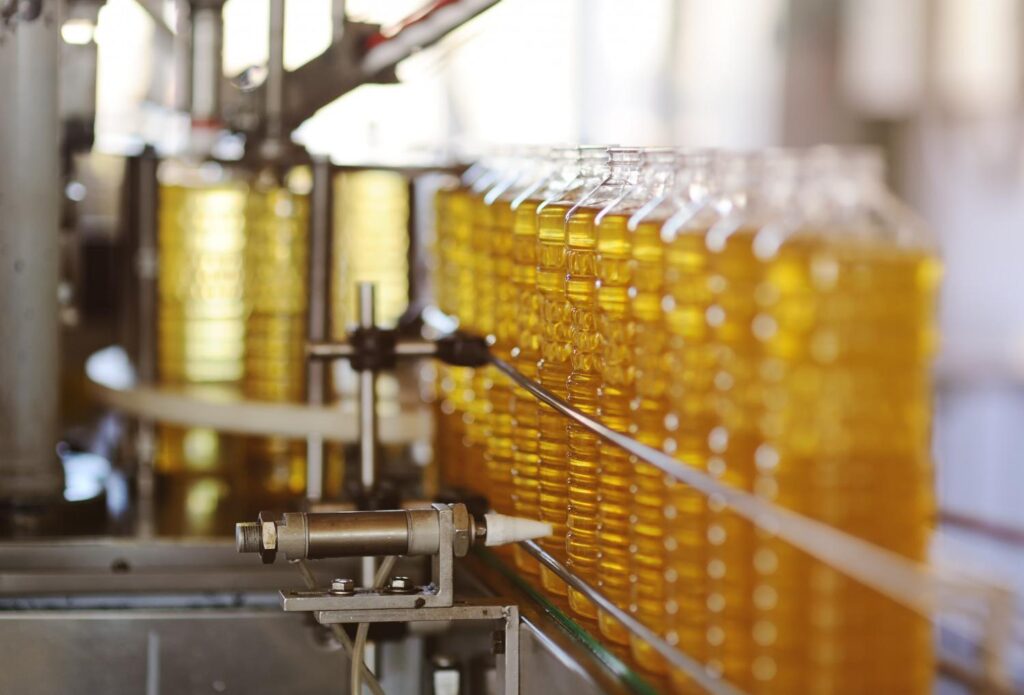
A palm oil mill operates as an interconnected system. Problems in one stage can affect downstream performance.
For example, MPOB notes that sterilisation is critical to effective oil extraction, while screw-press operation directly affects oil losses and broken nuts.
When selecting equipment, mill operators should consider:
- Processing capacity
- Operating temperature and pressure
- Power and torque requirements
- Material compatibility
- Continuous-duty requirements
- Maintenance needs
- Spare-parts availability
- Integration with existing equipment
Critical components such as gearboxes, gearmotors, pumps, valves, and drives should be selected according to the actual load and operating conditions.
Apex Uniparts: Palm Oil Mill Equipment Solutions
Apex Uniparts provides industrial equipment and engineering solutions for palm oil milling in Malaysia, with products covering key areas of the milling process.
Its Palm Oil Milling equipment range includes:
- Apex Drive reducing gearboxes for digester and screw-press applications
- APC gearboxes and gearmotors for conveyors
- SIHI/Flowserve and KEWPUMP pumps
- YSK valves and actuators
- Vibrating and remesh screens
- Flowmeters and Level Switches
- Other equipment for palm oil mill operations
This gives mills access to equipment across multiple process stages rather than sourcing every component separately.
For example, the Apex Drive/Guomao ADGF Digester Drive supports digester applications, while the ADGS Conveyor Screw Press Gearbox is designed for conveyor and screw-press gearbox applications.
Apex Uniparts also provides equipment selection, troubleshooting, commissioning, servicing, and application support, helping customers select equipment based on their actual operating requirements. Explore Apex Uniparts’ products and services.
Choosing the Right Palm Oil Mill Equipment
From FFB reception to CPO purification and kernel recovery, every stage of palm oil milling depends on machinery working reliably as part of an integrated process.
The right equipment should be selected based on mill capacity, operating conditions, process requirements, duty, maintenance needs, and compatibility with existing systems.
With its range of gearboxes, pumps, valves, drives, and other industrial equipment, Apex Uniparts can support palm oil mills in identifying suitable solutions for their processing requirements.
Looking for palm oil mill equipment in Malaysia? Explore Apex Uniparts’ Palm Oil Milling solutions or view the complete product range.