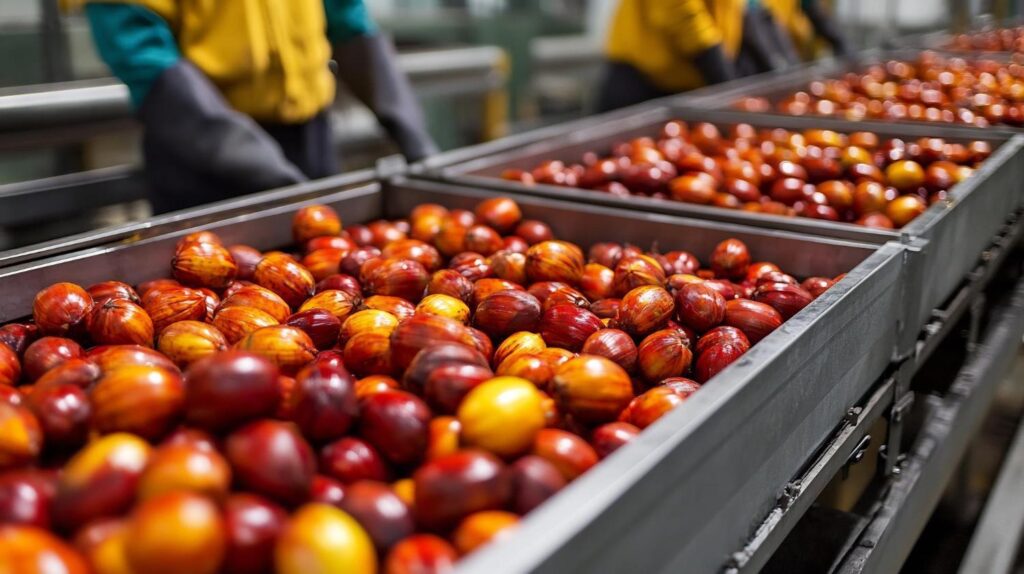


Fresh Fruit Bunch (FFB) conveyor jams usually occur when fibrous palm debris overloads the conveying system. If the chain is worn, poorly tensioned, or running on damaged sprockets, this overload can lead to pin failure, chain elongation, snapping, and damage to the sprockets.
For any conveyor jam, operators should immediately stop the drive motor and apply lockout/tagout procedures. Only clear compacted debris after the system is fully isolated and safe.
Most jams do not occur randomly. They are typically the result of physical blockages, improper tension, or worn components reaching the failure point. Understanding these causes is the first step in preventing breakdowns:
To extend equipment life, reduce daily wear, and prevent sudden breakdowns, implement these three effective maintenance practices:
Check for slack, sagging, pulsating movement, and abnormal chain noise. Adjust take-up units before the chain jumps or catches.
Do not install a new chain on worn sprockets. Replace the drive and driven sprockets together to reduce premature stretching.
Avoid thick grease that traps dirt. Use a suitable penetrating oil to reach pin and bush clearances and reduce internal galling.
| Inspection item | What to look for |
|---|---|
| Chain tension | Slack, sagging, pulsating movement, uneven running |
| Sprocket condition | Hooked teeth, uneven wear, misalignment, and damaged keyway |
| Chain condition | Elongation, stiff links, worn pins/bushes, cracked side plates |
As mills push for higher throughputs to meet Malaysian Palm Oil Board (MPOB) production targets in 2026, relying on unverified, standard-grade chains is a massive financial risk. Upgrading your conveyor jam components is one of the maintenance decisions you can make.
Apex Uniparts supplies heavy-duty conveyor chains, scraper chains, and matching sprockets for palm oil mill applications. The focus is on durability, correct fitment, and fast technical support for mills that cannot afford unplanned downtime.
Need to reduce conveyor downtime? Contact the Apex Uniparts engineering team today for chain inspection, sprocket replacement planning, and heavy-duty Apex Chain supply.
Apex Uniparts offers a wide spectrum of products and aftermarket services and is a leader in energy-efficient and environmentally friendly products. Our production process includes customized value engineering to ensure our projects are commercially competitive while still delivering exceptionally high quality integrated systems.