
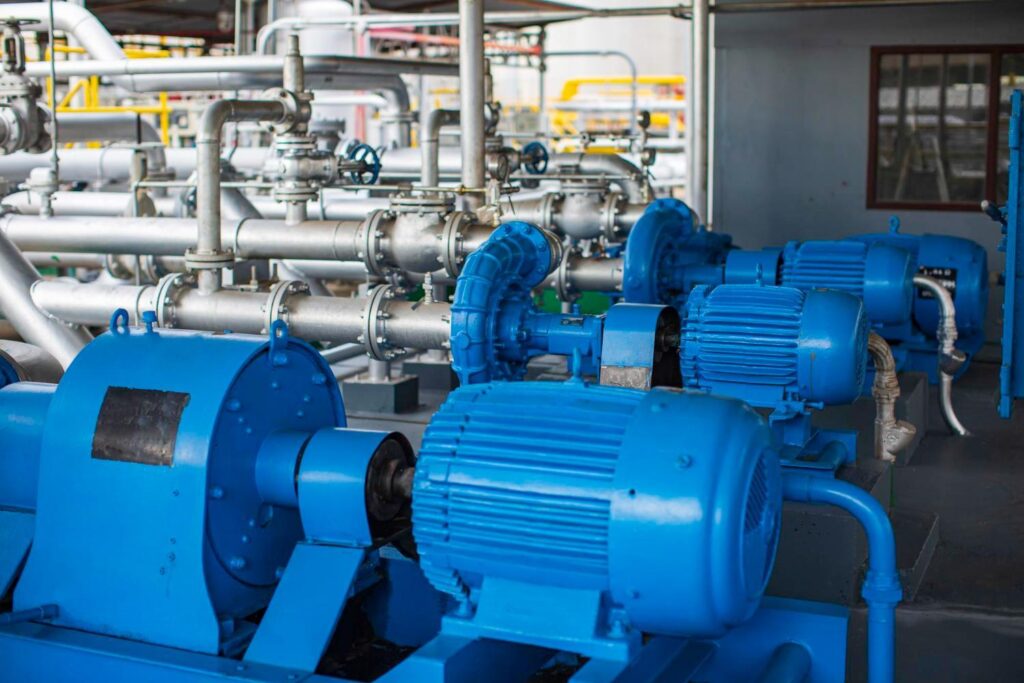
Accurate ESG reporting starts on the plant floor. For industrial manufacturers and palm oil processors, the reliability and efficiency of plant-level flow control systems directly shape the emissions, energy, and water data that underpin every sustainability disclosure.
How Flow Control Systems Influence ESG Reporting Performance
A facility’s flow control infrastructure typically includes pumps, valves, actuators, and flow meters, all working together to regulate fluid movement, pressure, and measurement accuracy.
Actuators improve process control by automating valve movement, reducing manual intervention, and helping operators maintain consistent flow conditions across critical systems.
Flow meters provide measurable data on water, steam, chemical, and fuel usage. This helps manufacturers track consumption, detect losses, and support ESG reporting with more accurate operational records.
When these systems are outdated or poorly maintained, facilities often experience:
- Increased water and energy consumption
- Uncontrolled process variability
- Fugitive emissions and leakage losses
- Inaccurate ESG reporting data
Upgrading integrated flow control systems allows manufacturers to improve operational efficiency while generating more reliable sustainability data that modern ESG reporting demands.
The ESG Regulatory Landscape for Malaysian Manufacturers
Environmental, Social, and Governance (ESG) criteria have become a central focus for industrial operations in 2026. For the Malaysian palm oil industry, ESG compliance under the sustainability frameworks set by the Malaysian Sustainable Palm Oil (MSPO) and the Roundtable on Sustainable Palm Oil (RSPO) is increasingly tied to global market access.
At the operational level, ESG performance is heavily dependent on mechanical systems such as pumping infrastructure, valve networks, automation components, and flow measurement devices. These systems directly influence the measurable indicators — energy usage, water consumption, and emissions intensity, which feed into every ESG reporting.
Mitigating Environmental Impact Through Flow Control
When a facility aims to operate using RSPO-certified mill equipment standards, the management of water, steam, and power is critical. Modernising flow control systems addresses three primary areas of environmental reporting:
1. Minimising Fugitive Emissions and Steam Loss
A significant source of undocumented emissions in industrial plants comes from leakage in valve systems and poor sealing performance. Common issues include: Worn valve packing, Steam leakage in steriliser and boiler lines, Poor shut-off performance under load.
These losses increase fuel consumption and contribute directly to higher Scope 1 emissions – a key line item in any manufacturing carbon footprint. Upgrading to precision-engineered Control Valves and automated Airomatic & Elomatic Actuators improves shut-off reliability and reduces energy loss by maintaining tighter process containment.
Actuators also support safer and more consistent valve operation by enabling faster response to process changes. This helps reduce leakage risks, improve containment, and strengthen ESG compliance records.
2. Optimising Water and Resource Consumption
Industrial processes rely heavily on accurate fluid dosing for cooling, separation, and processing. Manual valve operation often leads to overdosing of process fluids, excess wastewater generation, and inconsistent batch control.
By integrating flow meters with automated actuators and control valves, operators gain real-time measurement and precise flow regulation. This significantly improves resource efficiency and supports ESG audit accuracy.
Flow meters help manufacturers move from estimated reporting to measured reporting. They provide usage data for water, steam, fuel, and process chemicals, helping teams identify abnormal consumption patterns and reduce waste.
3. Improving Energy Efficiency (Scope 2 Emissions)
The condition of a plant’s valves directly impacts the electrical load of its pumping systems. A pump forced to push fluid through a partially stuck, heavily scaled, or inefficient valve experiences a higher pressure drop, requiring more electrical current to maintain the required flow rate.
Utilising modern, low-friction sustainable industrial valves, such as YSK-Hippo or Unicom Inline valves, reduces system resistance. This allows integrated SIHI/Flowserve Pumps and WEG Motors to operate nearer to their Best Efficiency Point (BEP), thereby lowering overall electricity consumption and improving Scope 2 emission metrics.
For manufacturers, this is one of the most direct levers for carbon footprint reduction, improving Scope 2 emission metrics while cutting operating costs.

Supporting Data-Driven ESG Reporting Audits
Modern ESG reporting requires verifiable data rather than estimates. Automated flow control systems provide the digital logging necessary to prove operational improvements. By pairing reliable valves with digital actuators and flowmeters, plant managers can generate accurate records of water, steam, and chemical usage.
This combination of valves, actuators, pumps, and flow meters creates a more complete flow control system. Valves regulate flow, actuators automate movement, pumps maintain transfer performance, and flow meters record usage data for reporting and audits.
This shift from manual operation to automated, measurable flow control is a foundational step in meeting the tightening environmental regulations of 2026, and in producing ESG reports that withstand third-party scrutiny.
Sourcing Compliant Industrial Equipment
Meeting sustainability targets requires industrial infrastructure that performs reliably under demanding conditions. Apex Uniparts supplies the engineering sector with the flow control technology, pumps, and automation required to support efficient, compliant manufacturing.
To discuss flow control upgrades or equipment specifications for your facility, contact the Apex Uniparts engineering team.